
 DSTAR machine
If you are in the market for a new pad printing machine, you are likely already aware of its unique ability to print on complex, three-dimensional surfaces. However, moving from knowing what pad printing is to deciding which machine to buy is a significant leap. Buyers—from seasoned procurement managers to startup owners—all tend to ask a similar set of questions.
This guide consolidates those top inquiries, with a special focus on automatic pad printing machines, to help you make a confident, informed investment.
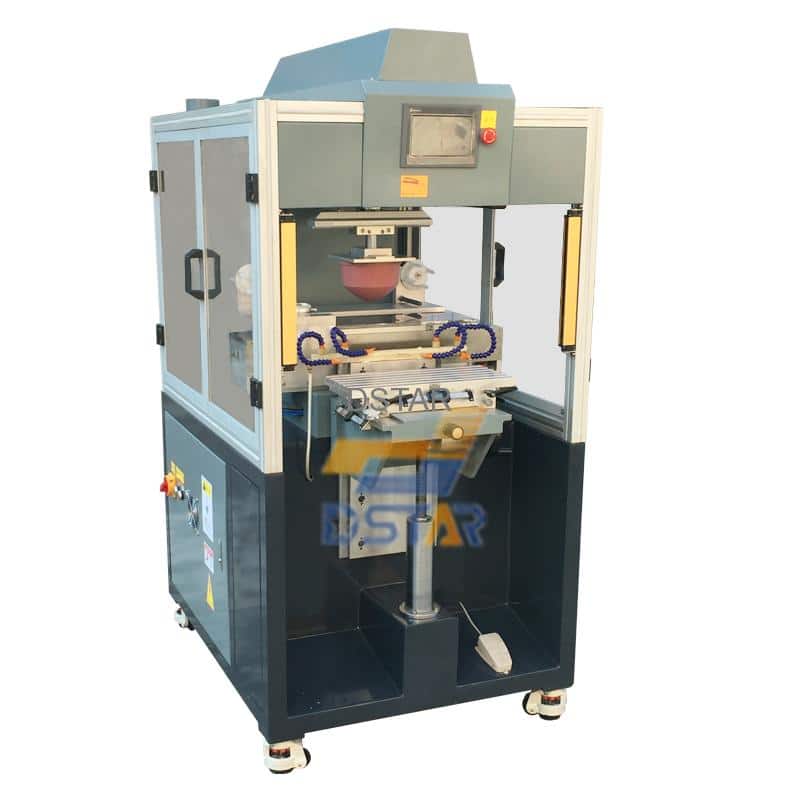
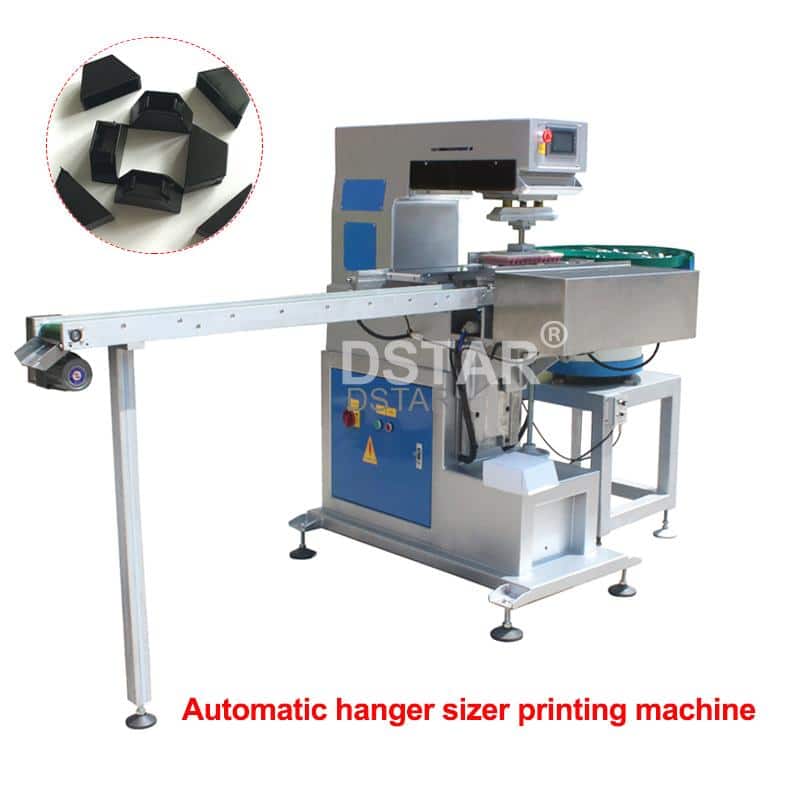
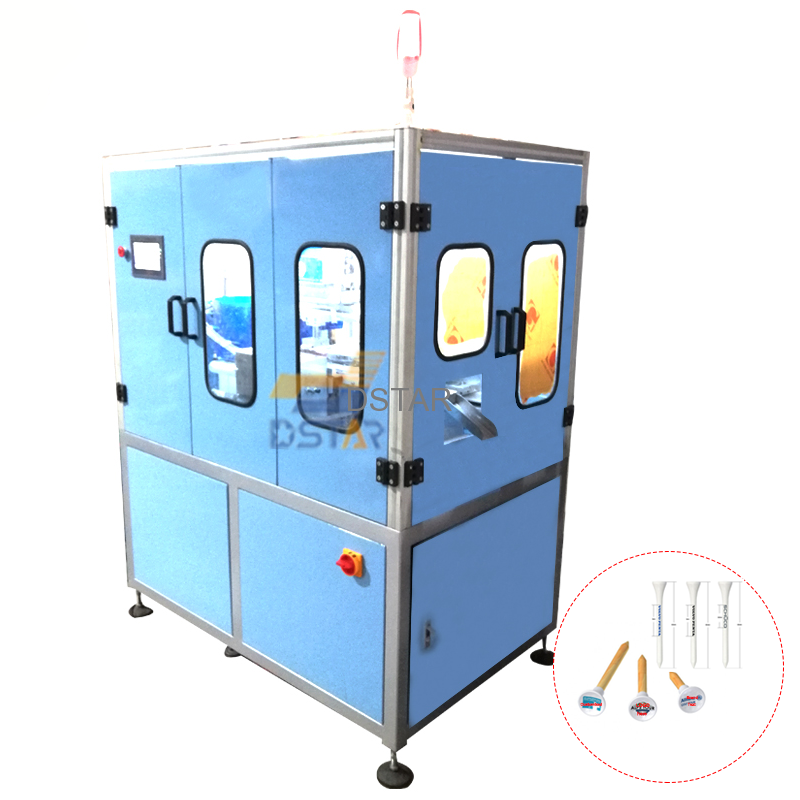
1. What Exactly is an Automatic Pad Printing Machine?
Before diving into specifications, it is crucial to understand what “automatic” means in this context. An automatic pad printing machine is a fully mechanized system that performs the entire printing cycle without manual intervention .
Unlike manual or semi-automatic machines (which require an operator to load parts or initiate the print cycle), an automatic machine handles the indexing of parts, the ink pickup, and the transfer process seamlessly. High-end models often integrate servo-driven alignment mechanisms and PLC (Programmable Logic Controller) control systems to handle complex, multi-color print jobs at high speeds . For high-volume manufacturers, this automation is the key to consistency and low labor costs. To see a full range of these industrial workhorses, you can browse our collection of automatic pad printing machines.
2. What Are the Main Advantages of Choosing an Automatic Model?
When buyers compare a pneumatic or semi-automatic unit to a full automatic pad printing machine, the advantages usually fall into three categories:
- Speed and Volume: Automatic machines drastically increase production rates. While a basic machine may cycle a few hundred times per hour, industrial automatic models can achieve speeds of up to 1,800 prints per hour or more .
- Precision: High-end automatic machines utilize servo motors to achieve precision tolerances of ±0.01mm. This is non-negotiable for industries like medical devices or electronics .
- Multi-Color Capability: Automatic machines often feature rotary index tables or shuttle systems that move a part precisely under multiple printing heads in one continuous cycle, allowing for perfect multi-color registration .
For applications requiring extreme precision, specifically designed servo pad printing machines offer the highest level of control and repeatability.
3. What Should I Look for in the Ink Delivery System?
One of the most frequent technical questions concerns the difference between an open inkwell and a sealed ink cup. For an automatic pad printing machine, the sealed ink cup system is the industry standard .
- Sealed Ink Cup: Uses a inverted cup that holds ink against the plate. It is environmentally friendly (less solvent evaporation), maintains consistent ink viscosity for longer runs, and is much cleaner. This is the preferred choice for automation.
- Open Tray/Inkwell: Ink sits in an open tray where a doctor blade scrapes excess. These are generally found on older or very basic machines and are less suited for the high speeds of automation.
4. How Do I Choose Between a Single-Color and Multi-Color Machine?
This is arguably the “core choice” for any buyer . A single-color automatic pad printing machine is simpler and has a lower initial investment. However, if your product requires two or more colors that must align perfectly (registration), you likely need a multi-color machine.
- The Verdict: If your product is high-value (like cosmetics or medical devices) and requires complex logos, the higher upfront cost of a multi-color automatic machine is justified by the efficiency and accuracy it provides. If you are doing simple, single-color marks on large volumes, a single-color automatic machine with a high-speed indexing table is sufficient.
We offer dedicated solutions for both scenarios, whether you need a streamlined single color pad printer or a complex multi color pad printing machine for intricate designs.
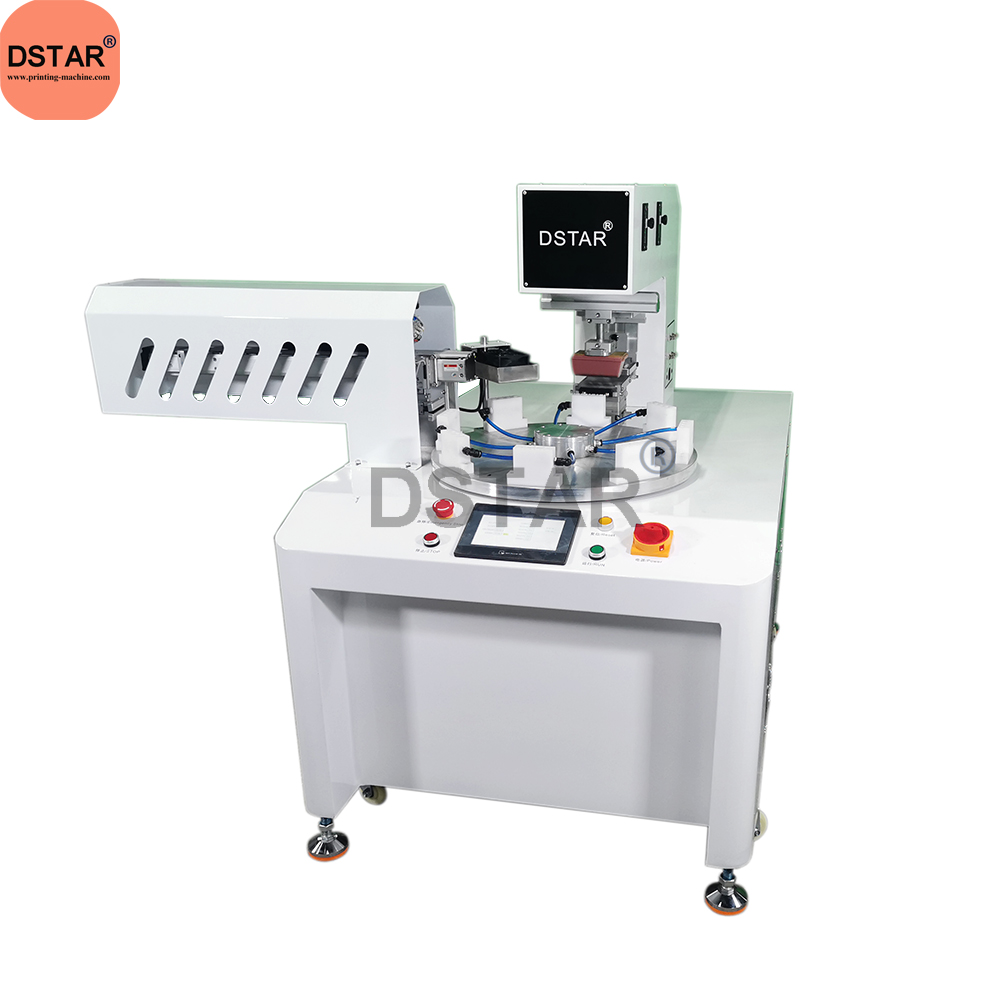
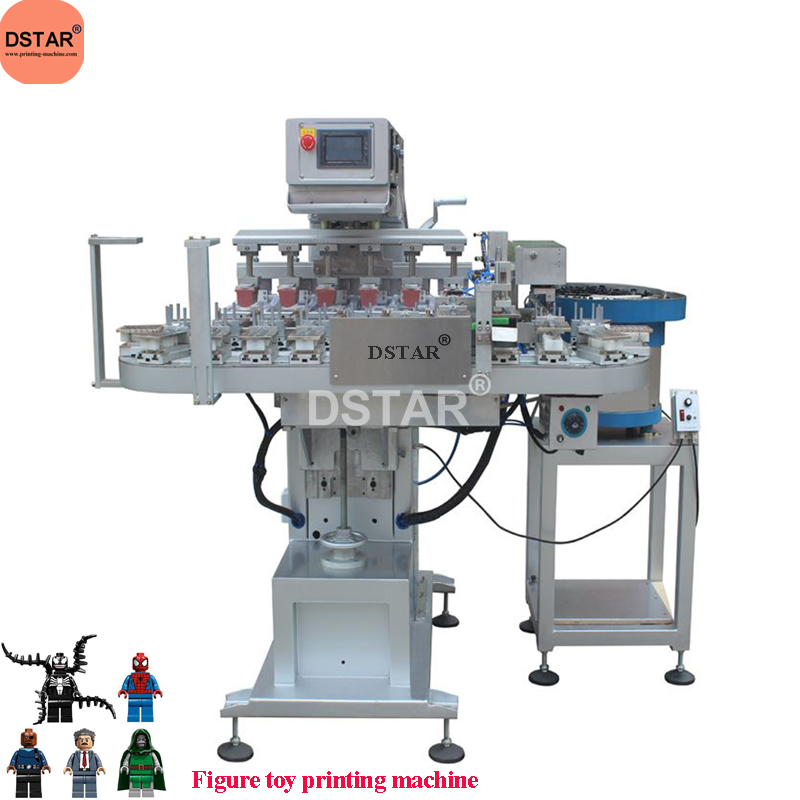
5. What Does the Price Range Look Like for These Machines?
Budget is always a top concern. The price of an automatic pad printing machine varies wildly based on size, color count, and level automation.
- Entry-Level Automatic: You might find smaller, fully automatic units starting in the range of $7,000 to $12,000 .
- Mid-Range Multi-Color: A robust, 2-4 color automatic machine with a decent indexing table typically ranges from $18,000 to $30,000 .
- High-End Industrial: Fully customized systems with vision inspection, servo drives, and 6+ colors can exceed $55,000 .
To get a specific quote tailored to your production volume and budget, exploring our range of pad printing machines for sale is a great starting point.
6. Can It Handle My Specific Product Shape and Size?
Yes, but you must verify the machine’s configuration. The beauty of pad printing is the silicone pad’s ability to conform to curves, but the machine must support it. Buyers should ask suppliers about pad height leveling and programmable stroke speeds .
When requesting a quote, you must provide:
- The image area dimensions.
- The part dimensions and where the print goes.
- The material type (to determine ink adhesion and need for pre-treatment) .
If you are printing on cylindrical objects like pens or tubes, you might need a specialized configuration such as a cylinder pad printing machine.
7. What Consumables and Maintenance Will I Need to Budget For?
Owning an automatic pad printing machine means managing the “four key players” of the process: the plate, the pad, the ink, and the workpiece .
- Pads: Silicone pads wear out after thousands of impressions. They come in various hardnesses (usually 39 to 70 Shore) and shapes. Softer pads conform better to rough surfaces .
- Clichés (Plates): These are the etched plates containing the image. Steel plates are durable for long runs, while polymer plates are cheaper for short runs .
- Ink and Thinner: Pad printing ink dries fast (3-8 seconds). You must use the correct thinner; using screen printing thinner (which dries slowly) will cause smudging .
Don’t forget that sourcing high-quality supplies is just as important as the machine itself. You can stock up on durable pad printing plates and various pad printing pads directly from our store.
8. How Do I Troubleshoot Common Printing Defects?
Even the best automatic pad printing machine can encounter issues. Buyers frequently ask how to fix these common problems:
- Blurry Edges: Usually caused by ink that is too thin, a pad that is too hard, or excessive pad pressure .
- “Ghosting” or Double Images: This indicates movement. Check if the machine parts are loose, the pad isn’t lifting cleanly, or the product is shifting in the fixture .
- Poor Adhesion: Often a surface energy issue. Materials like polypropylene (PP) and polyethylene (PE) usually require flame or corona pre-treatment to raise their surface tension to at least 38 dynes/cm .
9. What is the Typical Delivery and Setup Time?
For international buyers, logistics are critical. When sourcing an automatic pad printing machine, particularly from manufacturing hubs in China (Guangdong, Zhejiang), such as Shenzhen DSTAR Machine Co.ltd which has more than 15 years production experience in automatic pad printing machine .
- Production Time: Standard production usually takes 15 to 30 days after receiving a deposit .
- Sample Time: Requesting custom samples typically takes 7 to 14 days .
- Shipping: Air freight takes 5-7 days (costly), while sea freight (via ports like Shenzhen) takes 25-35 days .
10. How Do I Verify a Supplier’s Reliability?
Finally, buyers want to know they can trust the seller. Don’t just look at the price of the automatic pad printing machine; look at the supplier’s metrics. Shenzhen DSTAR Machine Co.,ltd is professional manufacturer to ensure:
- On-time delivery rate ≥90% .
- Response time ≤8 hours (indicating good service) .
- Reorder rate >30% (indicating customers are happy and come back) .
If you are looking for a specific application, such as printing on electronics or automotive parts, we also provide specialized solutions like the ink cup pad printing machine, known for its clean and consistent operation.
Conclusion
Purchasing an automatic pad printing machine is a strategic move toward higher efficiency and product quality. By asking these ten questions—covering everything from ink cup types to supplier verification—you move from being a passive buyer to an informed partner. Focus on your specific application, demand transparency from suppliers, and remember that the cheapest machine is rarely the most profitable in the long run.
#automaticpadprintingmachine #automaticpadprinter #padprintingmachine

WeChat
Scan the QR Code with wechat