 China printing machine manufacturer
What’s pad printing? DSTAR is honor to make an introduction to you.
Typical Applications
Pad printing is widely used across many industries, including:
- Promotional Products – Pens, keychains, USB drives, lighters
- Electronics – Keyboards, remote controls, computer components
- Medical Devices – Syringes, surgical instruments, implants
- Automotive Parts – Dashboard buttons, knobs, emblems
- Toys & Sporting Goods – Doll faces, golf balls, Christmas ornaments
- Apparel Accessories – Buttons, zipper pulls, sunglasses
Advantages
- Prints on uneven and oddly shaped surfaces
- High resolution and excellent detail reproduction
- Multi-color printing capability (using multiple plates)
- Cost-effective for both small and large production runs
- Fast cycle times
Limitations
- Limited print area size (typically small to medium)
- Ink thickness is thinner compared to screen printing
- Not ideal for highly porous or absorbent materials
In essence, pad printing is the go-to solution when you need to print a crisp, detailed image onto a surface that a flat printing method simply cannot reach. It bridges the gap between the flat printing world and the complex, three-dimensional objects we use every day.

The process that looks like “stamping with a seal” is called pad printing. In daily life, the patterns on many items are applied using pad printing, with the most common example being the printing of designs on mugs.
As shown in the animation, with three silicone pads lined up side by side — once one finishes printing, it rotates into position — the mug doesn’t even need to move, and it can enjoy a one-stop, carefully designed service from the “heart” to the “text” to the “frame.”

Pad printing is truly satisfying. A big, soft silicone pad picks up the ink, then with a “pat,” it presses down onto the object to be printed. The soft silicone pad conforms tightly and seamlessly to the surface of the object. In their intimate contact, the ink is transferred, and the printing achieves a grand cosmic harmony.

What is Pad Printing?
Pad printing, also known as tampography, is an indirect offset printing process that transfers a 2D image onto a 3D object. It uses a soft silicone pad to pick up ink from an etched printing plate (cliché) and then transfer it onto the surface of the item being printed.
How It Works
The process involves four key steps:
- Ink Flooding – The etched plate is flooded with ink, filling the recessed image area.
- Ink Removal – A doctor blade scrapes away excess ink, leaving ink only in the etched recesses.
- Ink Pickup – A soft silicone pad presses onto the plate, lifting the ink from the etched area.
- Transfer – The pad presses onto the target object, releasing the ink and leaving the printed image.

As an essential tool in pad printing, silicone pads come in various models and degrees of softness. The specific choice of which silicone pad to use depends on the size and shape of the printed design, as well as the rolling pressure applied.
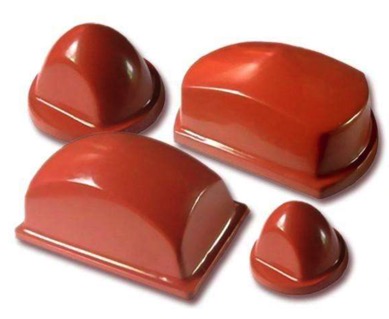
How to select right silicone pad?
The selection principle is: the harder the silicone pad, the better the ink transfer effect. After approximately 50,000 printing cycles, if the silicone pad shows obvious signs of wear, it should be replaced promptly. At the same time, care must be taken not to damage the surface of the silicone pad.

Key Characteristics of pad printing
*Cheap printing cost-Most of the processes are completed by machine processing, resulting in low cost per unit and low labor costs.

*Wide printing range: It can be used for printing on various uneven and contoured surfaces.

*Flexible production volume: It accommodates everything from single pieces to large-scale production. For single pieces, a simple steel plate can be made for printing; for large volumes, the process is completed by machines.

*Quality: It achieves clear printing details, even on uneven and contoured surfaces.
This printing technique is perfectly suited for objects with less-than-smooth surfaces that require a strong sense of three-dimensionality. No matter what shape you are, the silicone pad will embrace you with an accommodating heart, and then reshape you.


A soccer ball is stitched together from panels of different colors, but for a little kid’s toy soccer ball, there’s no need for such complexity — it’s just a plastic ball with black grid patterns painted on the outside, a little bit of deception.

The Barbie dolls that girls often play with are actually “made up” using pad printing as well! Look closely — those are completely bare faces, totally makeup-free. (lip,eyes,eyebrow,eyelash….)


1. Like other printing processes, it requires the aid of linear and rotary auxiliary equipment. Among them, rotary auxiliary equipment enables pad printing to be applied to uneven surfaces and cylindrical surfaces.
2. Like screen printing, pad printing can use conductive inks, making it possible to print on curved and concave-convex surfaces.
3. The finest line width for pad-printed characters is above 0.15 mm, and it is recommended to keep it above 0.2 mm. Line widths below this are very difficult to achieve.

WeChat
Scan the QR Code with wechat